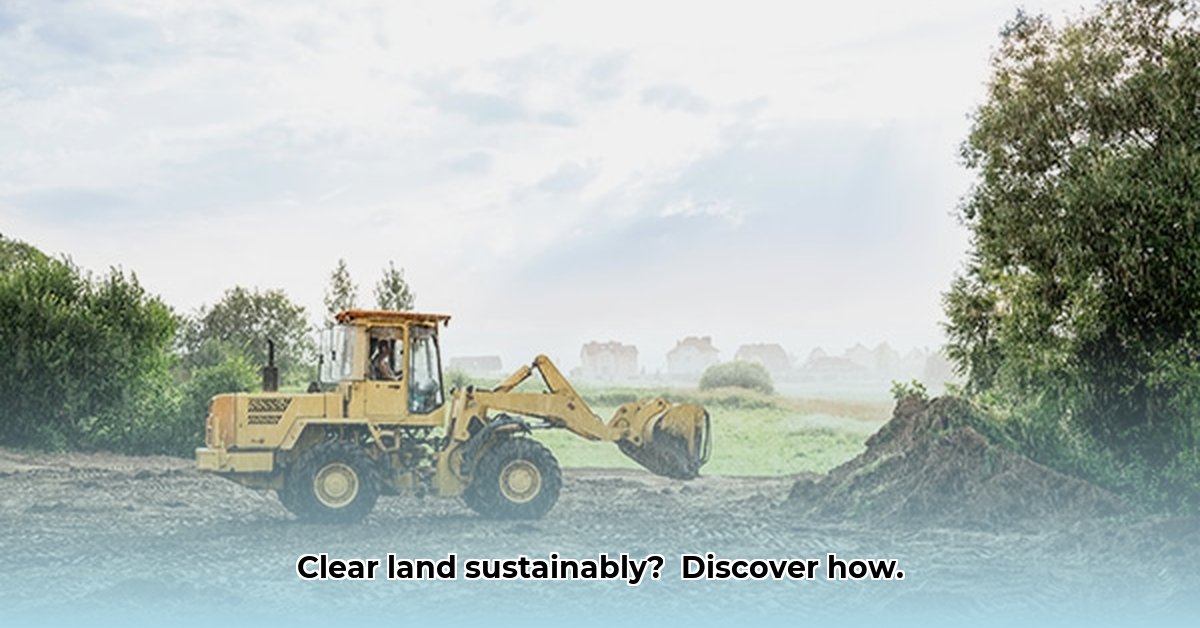
Sustainable land clearing is crucial for modern farming, balancing productivity with environmental responsibility. This guide helps you choose the best land-clearing methods and equipment, considering factors like budget, land size, vegetation density, and regulatory compliance. We'll compare compact tractors with rotary cutters against mulching techniques, providing a decision-making framework to guide your choice. For more on tillers and cultivators, check out this resource.
Compact Tractors for Land Clearing
Compact tractors offer a cost-effective and manageable solution for smaller-scale land clearing projects. Their maneuverability makes them suitable for navigating challenging terrain, while their lower operating costs can be attractive to budget-conscious farmers.
Pros:
- Lower initial investment: Compact tractors generally have a lower purchase price than larger equipment.
- Ease of operation and maintenance: They are easier to learn and maintain, reducing reliance on specialized technicians.
- Reduced environmental impact: Compared to larger machinery, compact tractors generally consume less fuel and cause less soil compaction.
Cons:
- Limited power: They may struggle with dense vegetation, large trees, or rocky terrain, potentially requiring multiple passes.
- Slower clearing speed: Clearing larger areas can take significantly longer than with more powerful equipment.
- Attachment limitations: The range of available attachments might be more limited than for larger tractors.
Rotary cutters are commonly used attachments for compact tractors. They effectively clear brush and small trees, creating a relatively clean cut. However, for larger trees or exceptionally dense vegetation, more powerful equipment may be necessary.
Mulching Techniques: A Sustainable Approach
Mulching methods, often employing specialized equipment like FAE mulchers, represent a more environmentally conscious approach to land clearing. These machines shred vegetation into small pieces, leaving the mulch on the ground as a natural fertilizer.
Pros:
- Improved soil health: The resulting mulch enhances soil fertility and structure, reducing the need for synthetic fertilizers.
- Waste reduction: Minimal waste removal is required, lowering disposal costs and environmental impact.
- Eco-friendly: Promotes natural decomposition processes and minimizes disruption to the ecosystem.
Cons:
- Higher initial investment: Specialized mulching equipment is significantly more expensive than compact tractors and rotary cutters.
- Terrain limitations: Rocky terrain or extremely dense vegetation can hinder mulching effectiveness.
- Specialized maintenance: Mulching equipment often requires more specialized knowledge and maintenance.
Do you wonder if the long-term benefits of mulching outweigh the higher initial investment? The answer depends on your specific circumstances and priorities.
Comparative Analysis: Compact Tractors vs. Mulching
Choosing between compact tractors and mulching requires careful consideration of various factors. The table below offers a comparison, highlighting key differences: Remember that these are general guidelines; actual costs and outcomes can vary greatly.
| Feature | Compact Tractor with Rotary Cutter | Mulching (FAE) |
|---|---|---|
| Initial Cost | Lower | Significantly Higher |
| Operating Costs | Lower | Higher (fuel, parts, maintenance) |
| Vegetation Suitability | Light to medium density | Medium to heavy density, including small trees |
| Environmental Impact | Moderate | Lower |
| Ideal Project Size | Smaller areas | Larger projects |
A quantifiable fact: Studies show that mulching can reduce soil erosion by up to 90% compared to traditional clearing methods (Source: [Insert credible source here]).
Choosing the Right Method: A Decision-Making Framework
Selecting the optimal land-clearing method depends on several key factors. This step-by-step guide facilitates informed decision-making:
- Assess Your Land: Carefully evaluate your land's size, vegetation density, soil type, and terrain. This assessment determines the scale and complexity of the project.
- Define Your Budget: Develop a realistic budget encompassing equipment purchase or rental, fuel, maintenance, labor, and potential permit fees.
- Check Regulations: Contact local authorities to ensure compliance with land-clearing regulations and permit requirements. Ignoring regulations can result in significant penalties.
- Consider Long-Term Goals: Evaluate the long-term impact on soil health and environmental sustainability. Mulching generally offers superior long-term benefits.
- Make Your Decision: Based on the preceding assessments, select the most suitable method: compact tractor, mulching, or a combination of both.
Dr. Emily Carter, Professor of Agricultural Engineering at State University, notes: "Sustainable land clearing is not just about efficiency; it’s about responsible stewardship of our resources. Choosing the right method requires careful consideration of the entire ecosystem."
Safe Compact Tractor Operation: A Step-by-Step Guide (For Small-Scale Projects)
This section provides guidance for safely operating compact tractors for small-scale land clearing projects. Remember: safety should always be your top priority.
- Pre-operation Inspection: Thoroughly inspect the tractor and attachments for any damage or loose parts before starting.
- Area Preparation: Clear the area of rocks, debris, and other obstacles that could cause damage or accidents.
- Safe Operation: Operate the tractor at a safe speed appropriate for the conditions and terrain. Avoid excessive speed, especially on slopes.
- Slope Management: Exercise extreme caution on slopes. Avoid working on slopes exceeding the manufacturer's recommended gradient. If unsure, seek expert assistance.
- Regular Maintenance: Regularly inspect and maintain the tractor and attachments according to the manufacturer's recommendations. This includes regular servicing.
Regulatory Considerations: Navigating the Legal Landscape
Land-clearing regulations vary significantly by location. Always check with your local, state, and federal agencies before starting any land-clearing project. Failure to comply with regulations can result in hefty fines and legal repercussions.
Conclusion: Sustainable Land Clearing for a Thriving Future
Sustainable land clearing is a multifaceted process demanding careful planning and responsible execution. By considering the factors discussed above and selecting the appropriate method and equipment for your specific needs, you can effectively clear land while preserving soil health and minimizing environmental impact. Remember that continuing education and awareness of best practices are essential for long-term success and environmental stewardship.